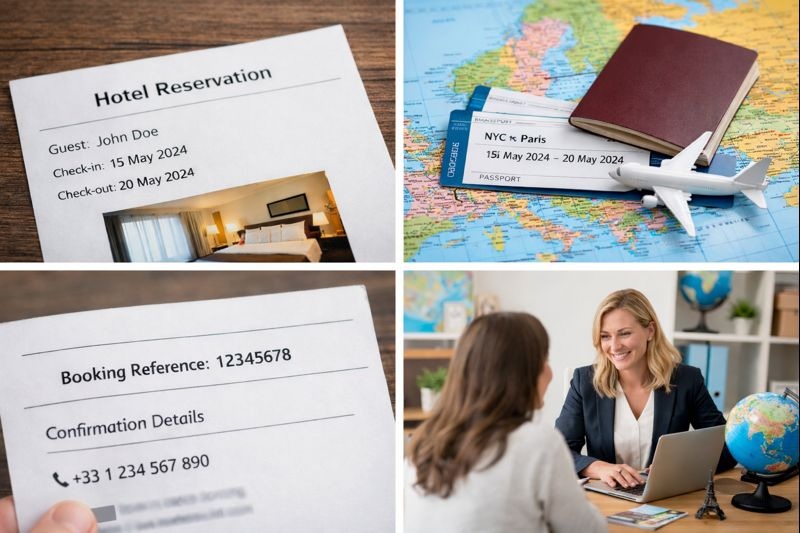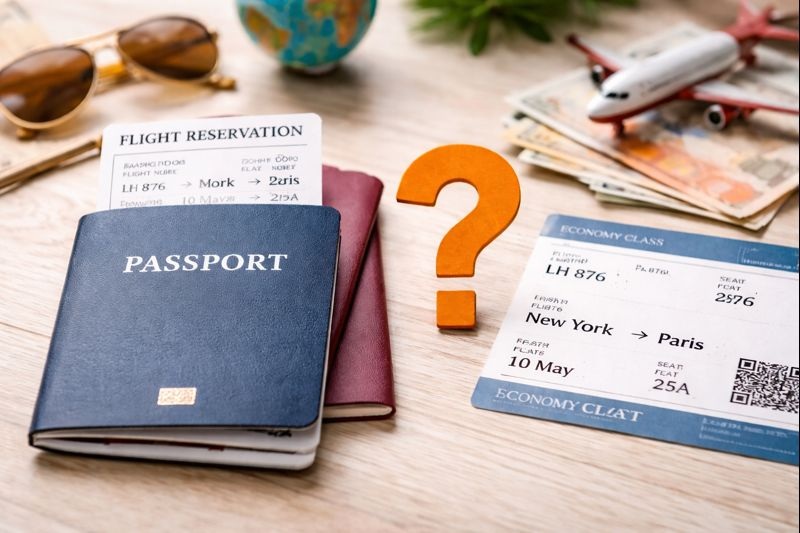
Why do embassies ask applicants for flight reservations during visa processing?

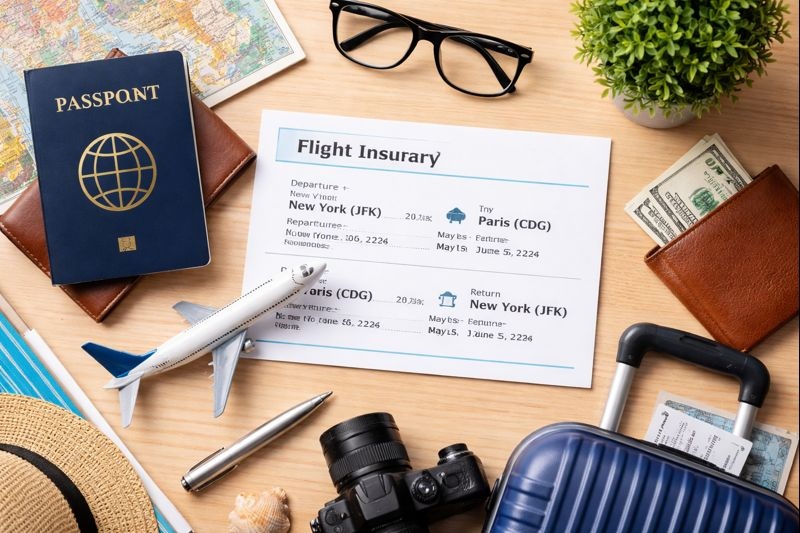
Embassies ask applicants to provide flight reservations  (not necessarily purchased tickets) during visa processing for several important reasons related to travel verification, credibility, and administrative procedures. Here’s why:

The following points explain the reasons in detail:

1. Proof of Intended Travel Plans

Embassies need to confirm that applicants have a clear and realistic travel itinerary, including their planned dates of entry and exit.

  • A flight reservation helps officials understand the length of stay, entry and exit points, and whether these align with the visa type requested.
  • It also demonstrates that the travel dates are temporary, supporting the applicant’s intention to return home after the visit.

2. Avoiding Unnecessary Financial Risk for Applicants

Embassies do not expect applicants to purchase actual tickets before receiving a visa.

  • Buying non-refundable tickets before visa approval can result in financial loss if the visa is denied.
  • Therefore, embassies accept flight reservations—temporary bookings that require no or partial payment—to assess travel intent safely.

3. Consistency with Other Documents

The dates on a flight reservation should correspond with hotel bookings, travel insurance, and invitation letters.

  • Consistency across all documents demonstrates that the travel plans are well-organized and genuine.
  • Any inconsistencies may raise doubts about the application’s credibility.

4. Immigration Control and Overstay Risk

A flight reservation indicates that the applicant intends to leave the destination country before the visa expires.

  • This assists the embassy in assessing whether the applicant poses a risk of overstaying or violating visa conditions.
  • For short-term visas, such as Schengen or tourist visas, a clear exit plan serves as essential evidence of compliance.

5. Administrative and Security Reasons

Flight reservations also assist authorities in:

  • Planning and recording the expected arrivals of foreign visitors.
  • Cross-checking travel data with other visa information systems for security and monitoring purposes.

Additionally, if you are looking for a reliable flight reservation provider, our team at Schengen Visa Itinerary has developed several tailored packages to make the process seamless. These packages are designed to meet the needs of different travellers and include not only flight reservations but also other essential documents, such as hotel bookings and travel insurance for visa applications.

Note:

Embassies request flight reservations to verify genuine travel intent, ensure consistency across documents, and minimize applicant risk—not because they require applicants to purchase tickets in advance.

If you still have questions or require professional assistance with flight reservations and visa applications, you may contact the team at Schengen Visa Itinerary. They provide free visa application consultations, as well as options to purchase flight itineraries and hotel reservations.

How does travel insurance protect me while travelling in Europe?

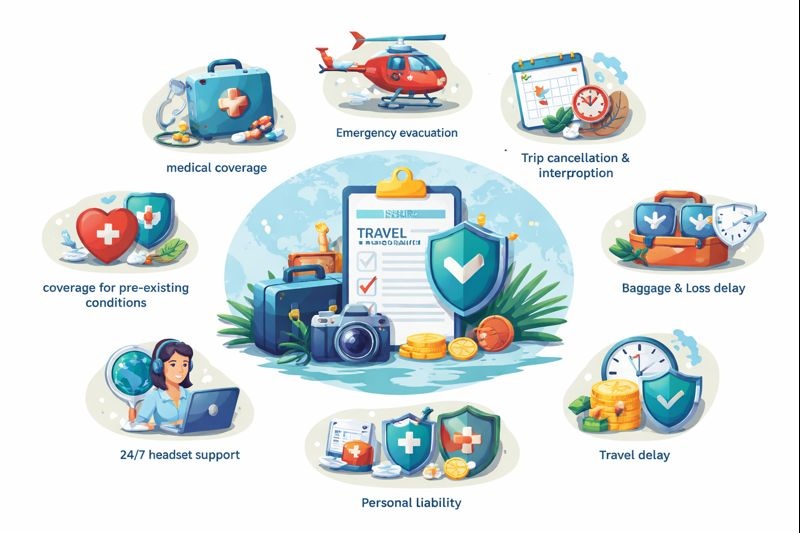
Travel insurance protects you in several key ways while travelling in Europe, covering unexpected costs and providing support in emergencies.

The following points explain how it works:

1. Medical Protection 

If you fall ill or are injured abroad, travel insurance can cover medical treatment, hospital stays, doctor visits, and even emergency evacuation to your home country. This is important, as non-EU visitors typically cannot access free or low-cost healthcare in Europe.

2. Trip Cancellation or Interruption 

If you must cancel your trip before departure (e.g., due to illness, family emergencies, or other covered reasons), insurance can reimburse non-refundable expenses such as flights or hotel bookings. If you need to return home early, it may also cover the cost of the unused portion of your trip and any new travel arrangements.

3. Lost, Stolen, or Damaged Belongings 

Insurance can reimburse you for personal items, such as luggage, passports, or electronics, that are lost, stolen, or damaged during your trip. Some policies even cover the cost of essential items if your baggage is delayed.

4. Travel Delays and Missed Connections 

If a flight is delayed or cancelled, travel insurance can cover additional costs such as meals, accommodation, or alternative transportation.

5. Emergency Assistance 

Most policies provide 24/7 helplines for emergencies, which can assist with arranging medical care, locating local services, or replacing lost documents.

6. Personal Liability Coverage 

If you accidentally injure someone or damage property, insurance can help cover the associated legal or compensation costs.

7. Optional Add-ons 

Many policies also offer optional coverage for adventure sports, car rentals, and valuable items. 

Choosing the right travel insurance ensures a stress-free journey, providing reliable financial protection against unforeseen events. Whether travelling domestically or internationally, securing comprehensive coverage remains essential. 

For those seeking a reliable option, the Schengen Visa Itinerary provides extensive protection, seamless claim processes, and affordable premiums, making it a smart choice for all travellers. These packages are designed to meet the diverse needs of travellers and include not only travel insurance but also essential documents, such as hotel bookings and flight itineraries for visa applications.

Conclusion 

Travel insurance serves as a safety net, helping you manage medical, financial, and logistical challenges while travelling in Europe, allowing you to focus on enjoying your trip with peace of mind. 

Start your journey confidently with the Schengen Visa Itinerary by securing affordable and comprehensive travel insurance for your visa application—all within minutes.

Do Schengen embassies accept flight itineraries without payment confirmation?

Yes, most Schengen embassies and consulates accept flight itineraries without payment confirmation for visa applications. In fact, it is strongly recommended not to purchase actual tickets before your visa is approved, as embassies do not guarantee approval and do not reimburse travel costs.

Here’s how it works and what you should keep in mind:

1. Accepted Documents 

  • A flight reservation or itinerary showing travel dates, the applicant’s name, and the route (round trip). 
  • This can be obtained as a flight itinerary without payment from a professional travel agency, or verified online platforms such as Schengen Visa Itinerary, which specialises in visa-compliant reservations. Many offer temporary booking or hold-reservation services. 
  • These itineraries are specifically tailored for visa applications and are widely accepted by most Schengen embassies and consulates. In addition to flight reservations, these services also provide hotel bookings and affordable travel insurance, helping applicants meet all necessary visa requirements efficiently.

2. Why Embassies Accept Unpaid Itineraries

Schengen embassies understand that purchasing a real ticket before visa approval can be costly and risky. Therefore, a confirmed flight reservation from a legitimate source is accepted as valid proof of travel plans. 

They primarily need to verify: 

  • You have a realistic itinerary. 
  • Your entry and exit dates align with your visa duration. 
  • Your travel is consistent with your accommodation and insurance documents.

3. Important Tips 

  • Ensure that the itinerary appears authentic and verifiable (with the airline’s logo, a valid PNR, and accurate dates). 
  • Double-check your specific embassy’s website, as requirements may vary slightly by country. 
  • To ensure reliability, use reputable providers (e.g., Schengen Visa Itinerary) that issue genuine, verifiable flight reservations for visa purposes. They are committed to providing trustworthy guidance and are ready to assist you throughout your visa application process.

When should you consider purchasing travel insurance for your trip?

You should consider purchasing travel insurance for your trip whenever there’s a possibility that unexpected events could cause financial loss, travel disruptions, or medical emergencies.

Below are the most common situations in which buying travel insurance is especially advisable:

1. When travelling internationally

Medical emergencies abroad can be extremely expensive, and many regular health insurance plans don’t provide coverage outside your home country. Travel insurance with medical and evacuation protection can safeguard you against these costs.

2. When your trip is costly or non-refundable

If you’ve paid in advance for flights, hotels, tours, or cruises, travel insurance can reimburse you for cancellations caused by illness, injury, or other covered reasons.

3. When travelling during uncertain times

Trips planned during hurricane season, political unrest, or periods of potential transportation strikes are at higher risk of interruptions or cancellations.

4. When you have multiple flights or destinations

Travel insurance can assist with missed connections, delayed flights, or lost luggage, helping you avoid additional out-of-pocket expenses.

5. When you or a family member have health concerns

If there’s a chance that a medical condition could force you to cancel or interrupt your trip, travel insurance can protect your investment.

6. When engaging in adventure or high-risk activities

If your itinerary includes skiing, diving, hiking, or similar activities, certain insurance policies offer extra protection for accidents or emergency evacuations.

Best Time to Buy:

It’s best to purchase travel insurance soon after booking your trip—ideally within 14–21 days. Some benefits, such as “Cancel for Any Reason” coverage, are only available within a limited window after your first trip payment.

Additionally, if you are looking for an affordable travel insurance provider, our team at Schengen Visa Itinerary has crafted several tailored packages to make the process seamless. These packages are designed to meet the needs of different types of travellers and include not only travel insurance for visa applications but also essential supporting documents such as hotel bookings and flight itineraries.

If you have any questions or require further assistance from experienced professionals, please do not hesitate to contact us.

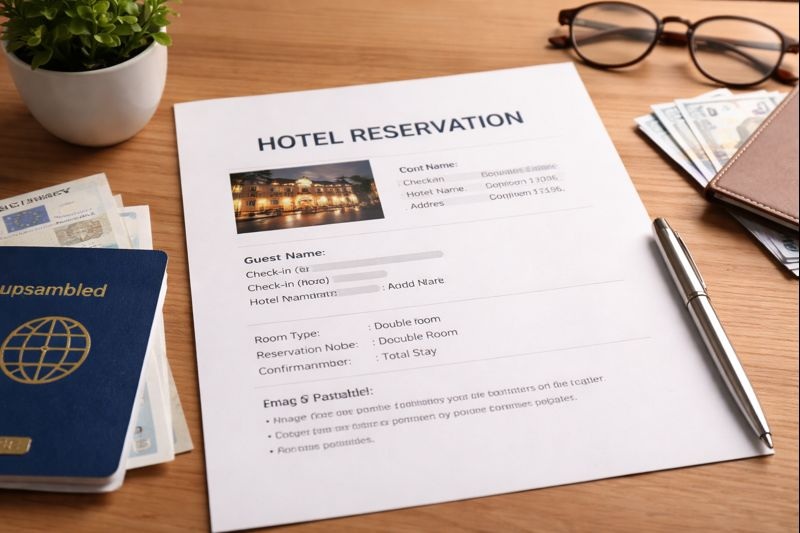
Why Should You Make a Hotel Reservation Instead of an Actual Booking for a Schengen Visa?

When applying for a Schengen visa, applicants are required to provide proof of accommodation for the entire duration of their stay. However, it is not mandatory to pay for the accommodation in advance. Instead, embassies and consulates typically recommend submitting a hotel reservation or temporary booking rather than an actual prepaid booking.

Here are the main reasons why:

1. Financial Safety 

Making a full hotel booking before visa approval can be risky, as visa processing times and outcomes are uncertain. If your visa is denied or delayed, you may lose the non-refundable payment. A hotel reservation, on the other hand, allows you to secure proof of accommodation without committing large sums of money.

2. Visa Compliance 

Embassies only need to verify that you have arranged accommodation; they do not require proof of payment. A valid reservation displaying your name, hotel address, and travel dates is sufficient for visa purposes. Agencies such as Schengen Visa Itinerary provide verifiable hotel reservations that meet embassy standards. These services also offer flight reservations and affordable travel insurance, assisting applicants in completing all necessary visa requirements efficiently.

3. Flexibility to Change Plans 

A temporary reservation allows you to modify or cancel your booking if your travel dates change or your visa is delayed. This flexibility ensures that you do not lose money on non-refundable hotel stays.

4. Cost Efficiency 

Using a reservation service or refundable booking option is often more economical and practical. You can demonstrate proof of accommodation without paying the full amount until your visa is approved.

5. Embassy Acceptance 

Most Schengen embassies explicitly accept temporary or dummy hotel reservations as valid proof of accommodation, provided they are verifiable and contain accurate details. This practice is widely recognized among visa applicants worldwide.

It is advisable to make a hotel reservation rather than an actual booking when applying for a Schengen visa because it minimizes financial risk, provides flexibility, and fully satisfies embassy requirements for proof of accommodation. A verifiable reservation demonstrates your travel intent without requiring full payment in advance.

Tip: Always obtain your reservation through a trusted provider such as Schengen Visa Itinerary to ensure that the documents are valid and verifiable by the embassy. Submitting falsified or unverifiable bookings may result in visa rejection.

Why is it better to use a flight itinerary instead of an actual ticket for a visa application?

Using a flight itinerary instead of a fully purchased ticket for a visa application is generally safer, more economical, and more practical.

1. Financial protection

Embassies do not guarantee visa approval, and if your visa is denied, a paid ticket, especially a non-refundable one, could result in significant financial loss. A flight itinerary, however, is only a temporary reservation, meaning you do not pay the full fare and can therefore avoid losing money if your visa is not approved.

2. Flexibility to modify travel dates

If the embassy takes longer to process your visa or requests changes to your travel plans, it is much easier to adjust a reservation than to modify or cancel a confirmed ticket. Actual tickets often come with high change fees or are non-changeable, whereas itineraries can be updated quickly and at little or no cost.

3. Accepted proof of travel intent

Most embassies, including those of Schengen, the United States, and the United Kingdom, accept flight itineraries or dummy tickets as valid proof of intended travel. They primarily need to verify your planned entry and exit dates, rather than a fully paid ticket.

4. Avoids the need for immediate payment

A full ticket purchase requires paying hundreds or even thousands of dollars in advance. A reservation from a verified travel agency or platform, such as Schengen Visa Itinerary, allows applicants to demonstrate genuine travel plans without unnecessarily tying up their funds.

5. Encouraged by visa guidelines

Many consulates explicitly state in their guidelines that applicants should not purchase flight tickets before visa approval. Instead, they recommend submitting a flight reservation or itinerary to avoid potential financial loss.

While flight itineraries or dummy tickets are widely accepted for visa applications, they must be authentic, verifiable, and obtained through legitimate sources. It is recommended to use trusted providers such as Schengen Visa Itinerary, which offer temporary flight reservations, hotel bookings, and affordable travel insurance to help applicants meet their visa requirements.

Conclusion

Using a flight itinerary instead of an actual ticket during the visa application process is safer, more flexible, and financially prudent. It provides embassies with all the necessary travel details while protecting applicants from the risk of losing money if a visa is denied or delayed.

If you have any questions or require further assistance from our experienced visa support professionals, please do not hesitate to contact us. We are committed to providing dependable guidance and are always happy to assist you throughout your visa application process.

Your successful application is our priority.
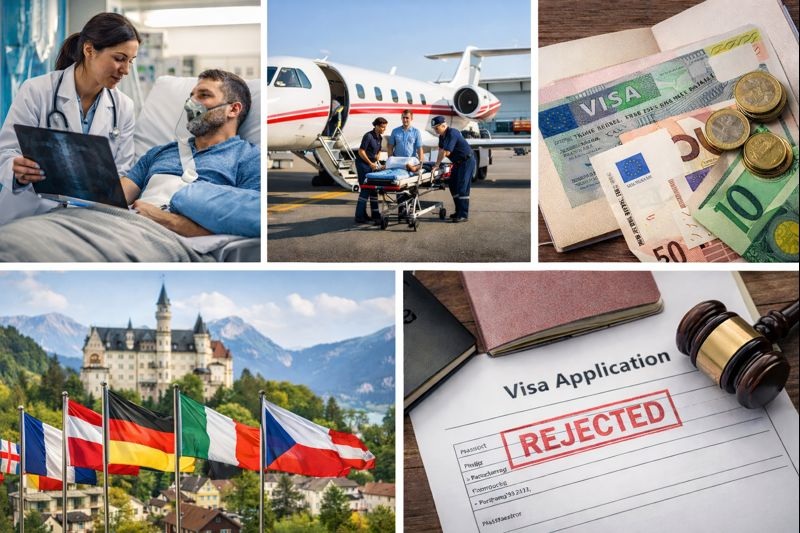
Why is having travel insurance beneficial for a trip to Europe?

Having travel insurance for a trip to Europe is highly beneficial, as it provides financial protection, emergency support, and peace of mind throughout your journey.

1. Medical Coverage and Emergency Assistance 

Healthcare costs in Europe can be significant for non-residents. Travel insurance covers emergency medical treatment, hospitalisation, and repatriation, ensuring that unexpected health issues do not result in substantial personal expenses.

2. Compliance with Schengen Visa Requirements 

For travellers visiting Schengen countries, having travel insurance is a mandatory requirement. It must offer a minimum coverage of €30,000, valid across all Schengen states, including provisions for medical evacuation and repatriation.

3. Protection Against Trip Disruptions 

Travel insurance provides reimbursement for trip cancellations, delays, or interruptions caused by unforeseen events, such as illness, adverse weather conditions, or family emergencies. This helps safeguard non-refundable expenses like flights and accommodation.

4. Coverage for Lost or Delayed Baggage 

Insurance compensates for lost, damaged, or delayed luggage, ensuring that travellers can replace essential items without additional financial strain.

5. Assistance Services 

Most policies include 24/7 multilingual support, offering guidance in emergencies ranging from medical arrangements to document replacement and travel rescheduling.

6. Peace of Mind 

Ultimately, travel insurance allows travellers to explore Europe with confidence, knowing that they are protected from unexpected financial losses or emergencies.

Additionally, if you are seeking an affordable travel insurance provider, our team at Schengen Visa Itinerary has developed several tailored packages to make the process seamless. These packages are designed to meet the needs of various types of travellers and include not only travel insurance for visa purposes but also other essential documents, such as hotel bookings and flight itineraries for visa applications.

Conclusion

Travel insurance is not merely a formality but a vital safeguard that ensures safety, compliance, and financial security when travelling in Europe. It mitigates potential risks by transforming unforeseen challenges into manageable inconveniences, thereby allowing travellers to experience a more secure and worry-free journey abroad.

If you still have questions or require professional assistance with travel insurance, our Schengen Visa Itinerary Support Team will be happy to assist you.

What is the role of a hotel reservation in visa processing, and how do I get one?

A hotel reservation plays a vital role in the visa process, as it helps embassies and consulates assess the authenticity and purpose of your travel. It serves as an essential component of proof of accommodation, ensuring that your travel plans are well organized and genuine.

Here’s how it helps during visa processing:

1. Confirms Your Accommodation Plans 

   It indicates where you intend to stay during your visit, confirming that appropriate arrangements have been made and that you are unlikely to face accommodation difficulties.

2. Demonstrates Genuine Travel Intent 

   Embassies regard a confirmed or verifiable hotel booking as evidence that you are a genuine traveller with a clear itinerary and no intent to overstay.

3. Supports Other Travel Documents 

   Your hotel reservation should correspond with your flight booking and travel dates, ensuring consistency across all application documents.

4. Simplifies Verification for Embassies 

   A verifiable hotel booking, particularly one containing a booking reference or confirmation number, enables embassies to verify your accommodation details efficiently.

5. Reduces Financial Risk 

   Many applicants opt for dummy or temporary hotel bookings, which provide valid proof of accommodation without requiring full payment prior to visa approval.

How to Get a Hotel Booking for a Visa

Below are the main and safest ways to get a hotel booking for visa purposes:

1. Book Through Trusted Online Platforms 

   Trusted travel websites allow applicants to make hotel reservations without immediate payment. 

2. Get a Dummy Hotel Booking from a Verified Agency 

  • A dummy hotel booking, also known as a temporary reservation, is created specifically for visa applications. It provides intended accommodation details without requiring full payment. 
  • You can obtain it from verified travel services such as Schengen Visa Itinerary, which provides a verifiable confirmation that includes your full name, check-in and check-out dates, and booking reference number.
  • These services may also provide flight reservations and travel insurance to help fulfill your visa requirements. However, submitting falsified documents can result in visa denial or future travel restrictions.

If you have any questions or need further assistance, our support team is always here to help. Feel free to contact us anytime.

What is the impact of using dummy flight tickets when applying for a Schengen visa?

The Impact of Using Dummy Flight Tickets When Applying for a Schengen Visa

Using dummy flight tickets (also known as flight reservations or temporary flight bookings) can have several positive impacts when applying for a Schengen visa, provided they are genuine and verifiable. These benefits primarily relate to cost management, application credibility, and convenience.

1. Demonstrates Genuine Travel Intent

A dummy flight ticket shows the embassy that the applicant has a clear and well-organized travel plan, including intended travel dates, destinations, and return arrangements. This demonstrates a serious intent to visit the Schengen area temporarily and return home after the trip, which helps build trust and credibility with visa officers.

2. Meets Embassy Documentation Requirements

Many Schengen embassies explicitly state that a flight reservation is sufficient as proof of travel itinerary during the visa application process. Providing a dummy ticket therefore satisfies this requirement without the need to purchase an actual ticket in advance.

3. Reduces Financial Risk

Applicants are not required to buy a non-refundable or expensive airline ticket before their visa is approved. Using a dummy ticket allows them to temporarily reserve a flight itinerary, thereby avoiding potential financial loss if the visa is refused or delayed.

4. Facilitates Visa Processing

Embassies often use the flight itinerary to determine the length of stay and entry or exit points. A well-prepared dummy ticket simplifies this evaluation, helping visa officers process the application more efficiently and accurately.

5. Provides Flexibility for Changes

Because dummy tickets are temporary, they can be modified or cancelled easily if the applicant changes travel plans or receives a different visa appointment date. This flexibility helps maintain accuracy and consistency in the submitted documents.

Best Practice Recommendations

  • Obtain dummy tickets only from reputable and verifiable sources (e.g., licensed travel agencies or legitimate booking platforms such as Schengen Visa Itinerary). These services may also provide hotel reservations and affordable travel insurance to help complete your visa requirements.
  • Ensure the itinerary matches your visa application dates and stated travel purpose.
  • Avoid submitting edited or falsified documents, as this can lead to visa refusal and legal consequences.

Conclusion

In summary, using a dummy flight ticket for a Schengen visa application offers several positive benefits, including demonstrating genuine travel intent, fulfilling visa documentation requirements, reducing financial risk, facilitating efficient processing, and allowing flexibility for changes. When obtained from reputable and verifiable sources such as Schengen Visa Itinerary, dummy flight tickets are a safe, practical, and embassy-accepted tool for visa applicants.

Is a Single Travel Insurance Policy Sufficient for Visiting Multiple Schengen Countries?

Yes, a single travel insurance policy is entirely sufficient for visiting multiple Schengen countries, provided it meets the official Schengen visa insurance requirements.

When travelling within the Schengen Area, one comprehensive travel insurance policy can provide full coverage for all member countries. Since the Schengen zone operates as a unified travel area without internal borders, travellers do not need separate insurance policies for each country visited.

Schengen Visa Insurance Requirements

According to the European Commission, applicants for a Schengen visa must hold travel medical insurance that:

  • Provides a minimum coverage of €30,000 (or equivalent).
  • Covers medical emergencies, hospitalization, and repatriation.
  • It is valid for the entire duration of the stay.
  • It is recognized in all Schengen member states.

As long as your travel insurance policy meets these requirements and explicitly states coverage for the entire Schengen area, it will be valid across all countries you visit during your trip.

Multi-Country Coverage

A Schengen-compliant insurance policy automatically extends to all 27 Schengen member states.

For example, if your itinerary includes Germany, France, and Italy, a single policy that covers the “Schengen Area” will protect you throughout your journey.

If you plan to enter and exit the Schengen zone multiple times, ensure that your policy includes multiple-entry coverage to remain valid for every trip.

How to Get Travel Insurance

Choosing the right travel insurance ensures that you travel stress-free, with financial protection against unexpected events. Whether you are traveling domestically or internationally, having comprehensive coverage is essential. For those seeking a reliable option, Schengen Visa Itinerary offers extensive protection, a seamless claims process, and affordable premiums — making it a smart choice for all travellers.

These plans are specifically designed for visa applications and are widely accepted by most Schengen embassies and consulates. In addition to travel insurance, they also provide flight reservations and hotel bookings, helping applicants fulfil all necessary visa requirements quickly and efficiently.

Conclusion

A single Schengen-compliant travel insurance policy is sufficient for visiting multiple countries within the Schengen zone. As long as the policy meets the official requirements and remains valid for the entire duration of your stay, there is no need to purchase separate insurance for each country.

If you have any further questions or require professional assistance with travel insurance for your visa application, please contact the team at Schengen Visa Itinerary for guidance and support.